
 0.0
0.0Description
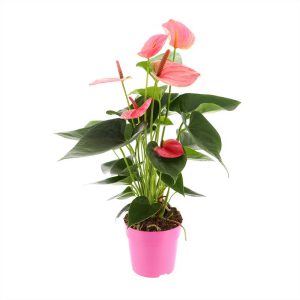
Here are care guidelines for Anthurium with red spathes:
Light: Provide bright, indirect light. Avoid direct sunlight, as it can scorch the leaves. Anthuriums can tolerate lower light conditions but may not flower as abundantly.
Watering: Keep the soil consistently moist but not waterlogged. Water when the top inch of soil feels dry. Anthuriums prefer to be kept evenly moist, and they don’t tolerate drought well. Use a well-draining potting mix to avoid root rot.
Humidity: These plants appreciate high humidity levels. You can increase humidity by misting the plant regularly, using a humidity tray, or placing a humidifier nearby.
Temperature: Maintain a warm and consistent temperature between 65°F to 80°F (18°C to 27°C). Avoid exposing the plant to cold drafts or sudden temperature fluctuations.
Fertilization: Feed your Anthurium with a balanced, liquid fertilizer diluted to half strength every 4-6 weeks during the growing season (spring and summer). Reduce or stop fertilizing during the dormant season (fall and winter).
Potting: Repot the plant when it becomes root-bound or outgrows its container. Use a pot that allows for proper root development.
Pruning: Prune away any yellow or damaged leaves and faded flowers. This can encourage new growth and improve the plant’s appearance.
Pest Control: Keep an eye out for common houseplant pests like spider mites and mealybugs. If pests are present, take appropriate measures to control them.
Flowering: Anthuriums typically bloom throughout the year, with their spathes adding color to your indoor space. However, flowering can vary depending on growing conditions and care.
Anthuriums are primarily grown for their beautiful, long-lasting spathes. While they have some air-purifying properties, they are not as efficient at this as some other houseplants. Nevertheless, Anthurium Red is a lovely addition to indoor spaces, and its striking appearance makes it a popular choice for those looking to add color and elegance to their homes.